Your Qualifications Are Being Reassessed. Here Is What That Means for You.
You have spent years building your reputation. Your certificate wall is proof of that commitment. But as the UK government's non-surgical cosmetics licensing regime moves closer to full implementation in 2026, the professional weight attached to different qualification types is being actively reassessed by insurers, clinic managers, and local authorities alike. An NVQ Level 3 beauty therapy certificate does not automatically carry the same standing as an accredited aesthetic course when you apply for a local authority treatment licence. That is not a criticism of the qualification. It is a structural fact that the industry is only now being forced to confront.
If you are an established beauty therapist, nurse, or healthcare professional wondering whether your existing qualifications will hold up under the new framework, you are asking exactly the right question. This article sets out a direct, factual comparison of what each qualification type signals to the people who matter most: employers, insurers, and licensing authorities.
What Each Qualification Type Actually Represents
The two tracks have very different origins, and understanding that difference is the starting point for everything else.
NVQ Level 3 Beauty Therapy
An NVQ Level 3 beauty therapy is a regulated qualification governed by Ofqual, the Office of Qualifications and Examinations Regulation. Awarding organisations such as VTCT (Vocational Training Charitable Trust) and City and Guilds design and deliver these qualifications within a national framework. The Level 3 sits on the Regulated Qualifications Framework (RQF), which means the content, assessment methods, and minimum learning hours are all scrutinised and approved at a governmental level.
The qualification covers core beauty treatments comprehensively: facials, massage, waxing, nail services, electrical treatments, and related anatomy and physiology. For general beauty therapy practice, insurance, and client trust, the NVQ Level 3 has for decades been the gold standard. Employers in salons and spas recognise it immediately. Insurers such as Balens, BABTAC, and the Guild of Professional Beauty Therapists list it as a foundation qualification for standard beauty insurance policies without hesitation.
Aesthetic Course Accreditation
Aesthetic course accreditation is a different animal entirely. It refers to the approval of a specific training course by a professional body, insurer, or industry organisation. Crucially, accredited aesthetic courses may sit entirely outside the Ofqual framework. They are not regulated by government in the same way. Their standing comes instead from recognition by bodies such as the Joint Council for Cosmetic Practitioners (JCCP), the Aesthetic Complication Expert (ACE) group, or individual insurer-approved lists.
This does not make them inferior. For specific procedures such as botulinum toxin injections, dermal fillers, polynucleotides, or profhilo treatments, insurer-approved accredited courses carry the weight that matters operationally. A clinic requiring evidence of injectable training will not accept an NVQ Level 3 beauty therapy unit as a substitute for an accredited injectable course, regardless of how prestigious the awarding organisation. The two systems were built for different purposes.
When the Distinction Actually Bites
For most of the past two decades, these two qualification tracks coexisted without creating practical conflict. Beauty therapists delivered beauty treatments. Aesthetic practitioners, often nurses or doctors, delivered injectable and energy-based treatments. The overlap was limited enough that practitioners rarely needed to understand the structural difference between their certificates.
That has changed. Four situations in particular are now creating real problems for established professionals.
Joining a Clinic That Requires Accredited Injectable Training
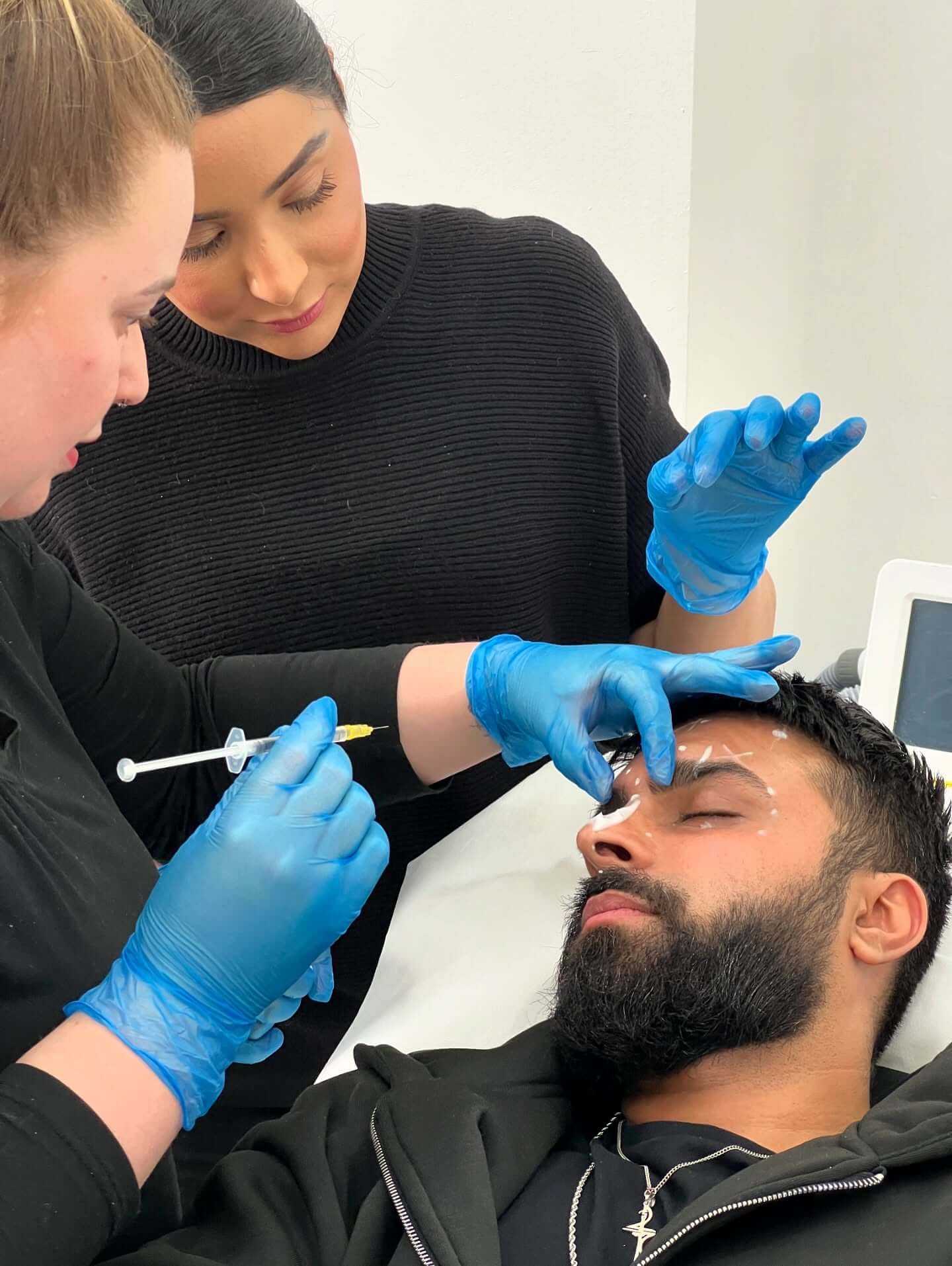
Multi-treatment aesthetics clinics are growing rapidly across the UK, and many now offer a full menu running from advanced facials through to anti-wrinkle injections and filler treatments. When these clinics recruit, they specify accredited training for each treatment category. A beauty therapist with an outstanding NVQ Level 3 beauty therapy record will be valued for their foundational skills, but they will still need to demonstrate an insurer-approved accredited aesthetic course for any injectable or advanced energy-based treatment they wish to deliver.
Insurance Renewal and Approved Lists
Professional insurers maintain approved qualification lists that are updated regularly. BABTAC's approved training list, for example, distinguishes between Ofqual-regulated qualifications and accredited aesthetic courses at the treatment level. If you wish to add botulinum toxin or advanced filler techniques to your policy, your insurer will look for a named accredited course, not an NVQ unit. Practitioners who have assumed their existing policy covers all treatments they now deliver risk discovering an uncovered gap only when a claim is made.
Local Authority Licensing Under the Forthcoming Framework
The Health and Care Act 2022 provided the legislative basis for mandatory licensing of non-surgical cosmetic treatments in England. As councils implement their local licensing schemes throughout 2025 and into 2026, they are beginning to specify qualification requirements for treatments such as dermal fillers, laser and IPL, and other advanced procedures. The requirement is not simply for a qualification: it is for a qualification of a specified type appropriate to the treatment being licensed. An NVQ Level 3 beauty therapy alone will satisfy some criteria and not others, depending on the treatment list attached to the licence application.
Healthcare Professionals Crossing into Aesthetics
Nurses and dentists in particular are increasingly moving into aesthetics, and they sometimes assume their clinical registration provides sufficient standing with aesthetic insurers. It provides clinical credibility, certainly, but specialist aesthetic insurers still require evidence of treatment-specific accredited training. A nurse with decades of clinical experience and no accredited aesthetic course may find the same gap on an insurer's approved list as a beauty therapist. The licensing framework evaluates treatment-specific training, not professional background alone. For dentists considering this route, there is a useful overview of how aesthetic training fits into dental practice that is worth reading before making decisions.
Why This Creates Real Professional Risk
The risk is concrete and immediate. Misunderstanding which qualification type satisfies a given requirement can produce three outcomes, none of them welcome
First, a practitioner may be unable to demonstrate compliance with local authority licensing requirements for a treatment they have been delivering for years. The treatment was legal before the licensing regime was implemented. Under the new framework, the absence of the right qualification type could render continued delivery non-compliant.
Second, insurance cover may lapse or be voided for specific treatments if the renewal check reveals the practitioner's qualifications do not meet the updated insurer-approved list for those procedures. Operating without valid insurance cover is not simply a financial risk: it exposes the practitioner personally to the full cost of any adverse event claim.
Third, clinic positions and partnership opportunities are being allocated to practitioners who can immediately demonstrate compliance across their full treatment menu. Practitioners who cannot produce the right certificates for the right treatments are being passed over, even where their practical competence is not in question. Competence and demonstrable compliance are different things under a licensing framework.
Why Most Practitioners Have Not Yet Noticed This Problem
The honest answer is that the two qualification tracks have historically existed in parallel without creating friction. Beauty therapists delivered beauty treatments under their NVQ and standard insurance policies. Aesthetic practitioners who were also clinically registered delivered injectables under their professional body oversight and specialist aesthetic insurance. There was little reason to compare the two frameworks directly, because practitioners rarely crossed from one to the other in a way that exposed the structural difference.
The UK government's non-surgical cosmetics licensing proposals, which were consulted upon extensively between 2020 and 2023 and have been progressing through implementation since, are forcing this comparison into the open for the first time. The licensing framework does not distinguish practitioners by their professional background. It distinguishes treatments by their risk level and specifies qualification requirements for each. That means a beauty therapist adding advanced treatments to their menu needs to understand both frameworks simultaneously, and most practitioners are only discovering this as they encounter a specific barrier: a clinic requirement, an insurer renewal question, or a council licensing form they cannot fully complete.
If you are exploring what a career evolution in aesthetics can look like from a practical standpoint, the overview at how to get a career as an aesthetic practitioner provides useful background on the path established professionals typically take.
How to Audit Your Own Qualification Portfolio
The most useful immediate step is a systematic audit of every certificate you hold. This is not complicated, but it does require attention to detail.
Pull out every certificate and classify each one as follows:
- Ofqual-regulated qualification: Check whether the certificate references the Regulated Qualifications Framework (RQF) or the awarding organisation's registration with Ofqual. VTCT and City and Guilds Level 3 qualifications will typically be clearly identified this way.
- Accredited aesthetic course: Check whether the certificate references accreditation by a professional body such as the JCCP, an insurer's approved list, or an industry body. The accrediting organisation should be named on the certificate or accompanying documentation.
- Unaccredited CPD or attendance certificate: Any certificate that is neither Ofqual-regulated nor explicitly accredited by a named professional body or insurer sits in this category. These have value for continuing professional development, but they carry no weight with licensing authorities or on insurer-approved lists.
Once you have categorised every certificate, map each treatment on your current service menu against two reference points. First, check your insurer's current approved list for each treatment. If your qualification for that treatment is not on the approved list, your cover may be narrower than you assumed. Second, check whether your local council has published or consulted on licensing requirements for the treatments you deliver. The requirements will differ between councils during the phased roll-out period, so a direct check is more reliable than relying on general guidance.
This audit will quickly reveal any gaps between what you deliver, what you are insured to deliver, and what you could demonstrate compliance for under a licensing application. Addressing those gaps before they become compliance barriers is considerably easier than addressing them under pressure.
How Este Training Academy Addresses the Gap
Este Training Academy provides accredited aesthetics training courses designed specifically for practitioners who already hold foundational qualifications and need to build their portfolio with certifications that carry genuine weight under the current and developing licensing framework.
The academy's training covers a range of aesthetic treatments relevant to practitioners expanding their service menus. Critically, the accreditation status of each course and its standing with the relevant bodies can be confirmed directly with the academy team. This is not a minor detail. As licensing requirements are clarified at the local authority level throughout 2026, practitioners need to know that the qualifications they invest in today will remain valid as the regulatory picture solidifies, not that they will need to repeat training in twelve months because the initial course did not meet the emerging standard.
For practitioners in the West Midlands, the Level 3 beauty therapy courses available in Birmingham through Este Training Academy offer a route to ensuring foundational and advanced qualifications are aligned with current standards, within a practical geographical reach that does not require extended absence from your existing client commitments.
The academy's approach is built around the understanding that established professionals do not need entry-level hand-holding. They need precise, high-quality training that fills specific qualification gaps, delivered efficiently and documented in a way that satisfies insurers, clinic managers, and licensing authorities. That is the practical standard that matters in 2026.
If you are building a broader understanding of the treatment types your clients are seeking, the background piece on why dermal fillers remain so popular illustrates why investment in accredited filler training specifically continues to pay dividends commercially.
The Practical Position in 2026
The NVQ Level 3 beauty therapy remains a highly credible, nationally recognised qualification. For salon-based beauty therapy practice, for foundational insurance cover on standard treatments, and for client confidence in your professional background, it continues to carry real weight. Nothing in the emerging licensing framework undermines its value for the purposes it was designed to serve.
What the licensing framework does make clear is that treatment-specific accredited training is now the currency for advanced aesthetic practice. Holding an NVQ Level 3 beauty therapy without the relevant accredited aesthetic courses means your qualification portfolio has a gap for any advanced or injectable treatment you wish to deliver legally, insurably, and in compliance with any licence requirements your local council imposes.
The practitioners who will be best positioned as licensing implementation accelerates are those who have already conducted the audit described above, identified their gaps, and filled them with properly accredited training from a provider whose standing can be confirmed with the relevant bodies.
Understanding exactly what each qualification on your wall signifies is no longer a matter of professional interest. It is a compliance requirement, and it will become more pressing with each quarterly update to local authority licensing schemes throughout 2026 and beyond.
Contact Este Training Academy to discuss your current qualification portfolio and confirm which accredited courses will address the specific gaps that apply to your treatment menu and location. The conversation is the most productive first step you can take before the licensing requirements in your area become mandatory rather than advisory.